Why a Commercial Energy Audit Is Worth Considering in 2026

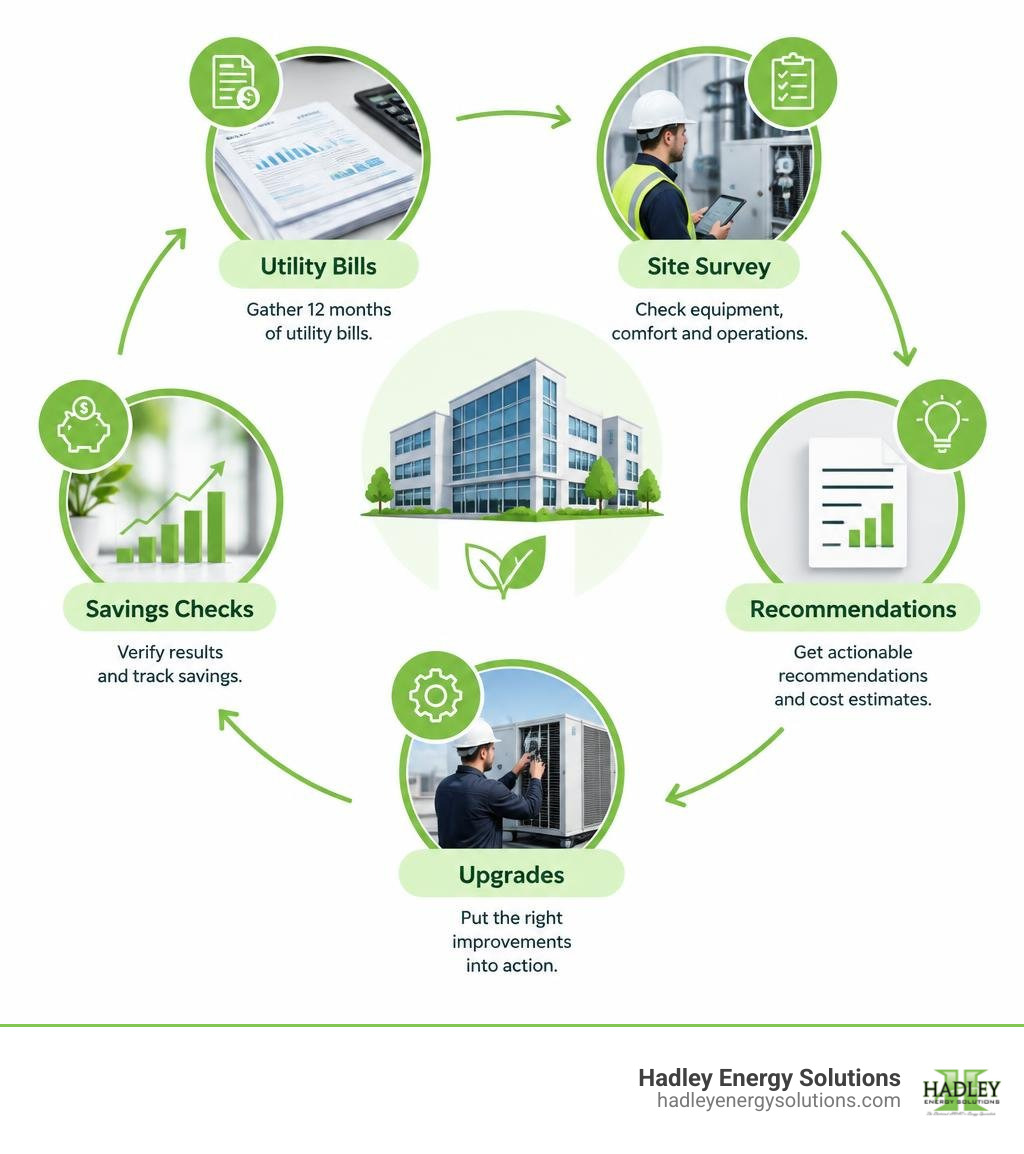
A commercial energy audit shows where your building uses energy, what may be driving high bills, and which fixes are worth paying for. Start by gathering 12 months of utility bills and noting comfort problems, equipment failures, and operating hours. Then choose the scope that fits your decision: a Level 1 walk-through for quick opportunities, a Level 2 audit for costed recommendations, or a Level 3 analysis before a major investment.
For a Louisville facility with aging HVAC or electrical systems, that means a clearer plan for upgrades rather than guesswork. The audit itself does not cut your bill; putting the right recommendations into action does.
I'm Rodney Hadley, owner of Hadley Energy Solutions and a Certified Energy Auditor with more than 13 years of electrical, HVAC, and energy-services experience. In this guide, I'll show you how to evaluate a commercial energy audit and turn its findings into practical next steps.
Commercial buildings consume nearly half of all energy used across U.S. buildings, representing roughly 20% of total national energy consumption and greenhouse gas emissions. In commercial and institutional facilities, annual energy expenditures average well over $2 per square foot. Between ongoing utility rate volatility, rising operational overhead, and expanding municipal decarbonization mandates, leaving building performance to chance is a fast track to budget overruns.
What Is a Commercial Energy Audit and Why It Matters in 2026

A commercial energy audit is a comprehensive, engineered evaluation of how energy flows through your building. Rather than relying on guesswork, it establishes an empirical baseline of your operational efficiency, diagnostics for aging equipment, and an actionable roadmap of prioritized capital and operational projects.
Auditing standards were revolutionized when ASHRAE published Standard 211 in 2018. This landmark standard established rigorous, consistent minimum requirements for commercial audits nationwide, ensuring building owners receive standardized engineering analyses rather than high-level sales pitches.
Core Goals and Financial Impact on Operating Budgets
The primary goal of an audit is to slash avoidable operating waste while protecting—or improving—occupant comfort, safety, and productivity. Our team approaches this by evaluating your building's Energy Use Intensity (EUI), measured in thousands of British thermal units per square foot (kBtu/sq ft).
By comparing your facility's EUI against national medians in EPA's ENERGY STAR Portfolio Manager, we pinpoint operational gaps. Furthermore, an audit attacks two distinct cost drivers on your utility invoice:
- Total Consumption (kWh): The overall volume of electricity consumed over time.
- Peak Demand Charges (kW): The highest rate of energy draw during short intervals (typically 15-minute windows), which can account for 30% to 50% of a commercial electric bill.
Through comprehensive energy audits and guidance from resources like Energy Audits for Small Businesses | ENERGY STAR, facility managers gain the financial leverage needed to optimize operating budgets and protect their bottom line.
Evaluating Major Building Systems: HVAC, Lighting, and Envelope
A thorough facility evaluation examines every interrelated consumer of energy:
- Building Envelope: We assess wall assemblies, fenestration, insulation integrity, and air infiltration points. Eliminating thermal bridging and envelope leaks prevents conditioned air from escaping, directly reducing heating and cooling loads.
- Commercial HVAC Systems: Heating and cooling equipment represents the single largest operational energy load in commercial buildings. Auditors evaluate system efficiency by taking Delta-T measurements across cooling and heating coils, testing economizer operation, checking static duct pressure, and inspecting distribution networks.
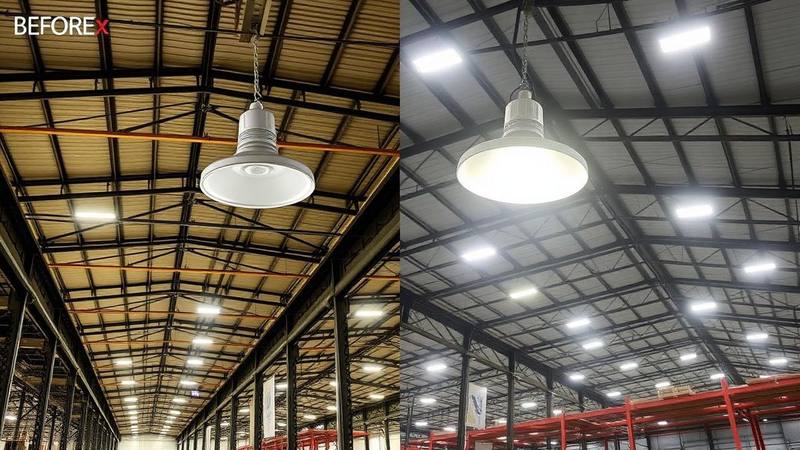
- Lighting and Lighting Controls: Modern lighting retrofits coupled with automated lighting controls—such as daylight harvesting and occupancy sensors—frequently deliver immediate 40% to 70% reductions in lighting electricity usage.
- Motor Loads and Drives: Constant-speed pumps, chillers, and air handler fans often run at full throttle regardless of actual building load. Equipping motors with variable frequency drives (VFDs) ensures equipment throttles down to match dynamic demand.
- Building Automation Systems (BAS): Control schedules frequently drift over time. Auditors review sensor calibration, reset schedules, and occupancy override sequences that quietly drive up utility bills after hours.
How Small Businesses Benefit from a Commercial Energy Audit
Small commercial facilities often operate with tight operating margins and minimal full-time maintenance staff. For these businesses, an audit removes the dilemma of choosing between piecemeal repairs and costly, full-scale facility retrofits.
Auditors can help small property owners leverage tools like ENERGY STAR Treasure Maps to uncover low-cost opportunities—such as programmable thermostat optimization, schedule setbacks, and weatherstripping—while evaluating targeted equipment replacements. In addition, an audit identifies opportunities to save on electricity bills through rate tariff optimization and power factor correction, ensuring you never overpay for delivered energy.
The Three Standard Levels of Energy Audits Explained
ASHRAE Standard 211 categorizes audits into three structured tiers. Selecting the right level depends on your facility's complexity, budget constraints, and whether you are planning major capital replacements.
| Audit Level | Primary Scope | Typical Cost Range | Diagnostic Depth | Ideal Application |
|---|---|---|---|---|
| Level 1 (Walk-Through) | High-level site inspection, utility data review, low/no-cost measures. | Lowest (often subsidized by utilities) | Visual inspections, rough financial estimates (±30–40%). | Initial facility screening, small buildings, portfolio benchmarking. |
| Level 2 (Survey & Analysis) | In-depth engineering survey, end-use energy breakdown, life cycle financial modeling. | Moderate ($0.05–$0.25 / sq ft) | Diagnostic tools, load profile analysis, detailed ROI (±15–20%). | Standard commercial buildings, comprehensive capital planning. |
| Level 3 (Investment-Grade) | Dynamic computer simulation, continuous data logging, precision sub-metering. | Highest ($0.20–$0.50+ / sq ft) | Long-term data loggers, hourly calibrated building modeling (±5–10%). | Multi-million dollar retrofits, performance contracts, institutional facilities. |
Preliminary Energy-Use Analysis and ASHRAE Level 1 Walk-Through
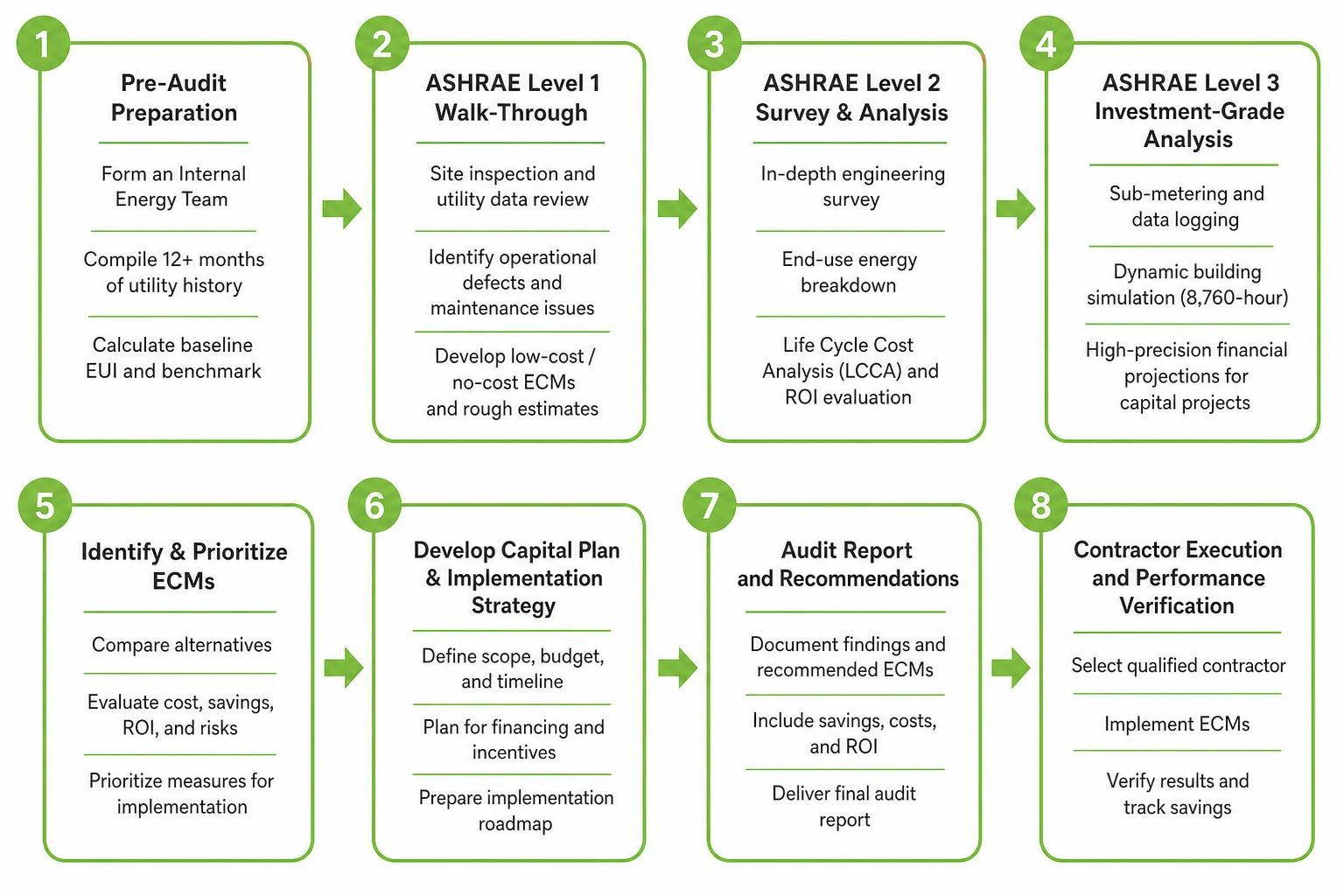
Every audit begins with a Preliminary Energy-Use Analysis (PEA). The auditor compiles at least 12 months of utility history, calculates the facility's baseline EUI, and benchmarks it against peer properties.
During an ASHRAE Level 1 walk-through survey, the auditor inspects major equipment rooms, identifies obvious operational defects, notes maintenance issues, and develops a high-level list of low-cost and no-cost energy conservation measures (ECMs). While Level 1 audits provide rough capital project estimates, they serve as a cost-effective screening tool to determine whether deeper engineering analysis is warranted, as outlined in academic resources like the Auditing Overview | Building Energy Audits guide.
ASHRAE Level 2: Comprehensive Energy Survey and Analysis
The ASHRAE Level 2 audit is the most common and practical evaluation commissioned by commercial building owners. It entails a rigorous engineering survey that disaggregates overall utility consumption by end-use category—separating lighting, space heating, cooling, ventilation, plug loads, and domestic hot water.
Auditors evaluate system operation, inspect control sequences, and perform Life Cycle Cost Analysis (LCCA) for each recommended measure. Furthermore, Level 2 audits account for health and safety interactions; for instance, tightening building envelopes without verifying outdoor air ventilation rates can compromise indoor air quality. For a deeper look at compliance and guidelines, refer to ASHRAE's Procedures for Commercial Building Energy Audits or explore ASHRAE Level 2 audit cost expectations for regional facility estimates.
ASHRAE Level 3: Investment-Grade Capital Modification Analysis
Often referred to as an "investment-grade audit," an ASHRAE Level 3 assessment is designed for complex, capital-intensive projects where financial lenders or municipal stakeholders require rigorous risk mitigation.
A Level 3 audit expands on Level 2 by deploying sub-meters and data loggers across individual electrical circuits and mechanical subsystems for weeks or months. This empirical data is fed into 8,760-hour dynamic building energy simulation models (such as eQUEST or EnergyPlus) to evaluate interactive effects between building systems. The resulting financial projections provide the high-precision cash flow and debt-service coverage models required for multi-million-dollar project financing.
Key Steps in the Commercial Energy Auditing Process

A professional energy audit follows a structured, step-by-step methodology to transform historical raw data into an engineered capital plan.
Pre-Audit Preparation and Baseline Data Collection
Preparation directly dictates the accuracy and cost-effectiveness of your audit. Before an auditor steps on-site, building owners should:
- Form an Internal Energy Team: Involve facility engineers, financial managers, and operations personnel who understand everyday building quirks.
- Assemble Utility Data: Compile at least 12 to 24 months of continuous electric, natural gas, steam, and water invoices.
- Gather Architectural and MEP Drawings: Providing original mechanical, electrical, and plumbing schematics saves auditors from manually mapping infrastructure, which substantially reduces overall audit fees.
During this stage, conducting a detailed energy bill analysis helps spot meter reading errors, unmetered power factor penalties, and tariff misclassifications. In fact, standard international practices outlined by agencies in guides like Conduct an energy audit | energy.gov.au emphasize that data readiness is foundational to audit success.
On-Site Diagnostic Survey and Load Profiling
During the on-site walkthrough, auditors deploy diagnostic instruments to evaluate hidden building inefficiencies:
- Infrared Thermography: Thermal imaging cameras reveal insulation voids, thermal bridging, and leaking window seals.
- Power Quality Loggers: Digital electrical analyzers measure active power (kW), total consumption (kWh), harmonics, and phase balancing across distribution switchgear.
- Ultrasonic Flow Meters & Manometers: Measure hydronic flow rates and duct static pressures to determine pump and fan operating efficiencies.
- Operating Schedule Audits: Documenting baseline plug loads and lighting burn hours against actual facility occupancy schedules. Implementing sound facility energy management strategies ensures that automated setback schedules match actual operating reality.
Audit Reporting and Actionable Recommendations
The culmination of an energy audit is the comprehensive final report. A high-quality report should never be an unreadable pile of raw numbers; it must provide an executive summary, clear engineering narratives, and a structured table of Energy Conservation Measures (ECMs).
Each proposed measure must feature:
- Estimated annual energy savings (kWh, therms, and peak kW reduction).
- Turnkey capital implementation costs.
- Simple payback period, Net Present Value (NPV), and Internal Rate of Return (IRR).
- Applicable utility rebate calculations and tax incentives.
To ensure your investment delivers as promised, building managers should ask auditors to provide clear performance specifications for contractors, leveraging resources like our financing and energy efficiency rebates guide to secure project capital.
Energy Audits vs. Retro-Commissioning: Maximizing Facility Performance
Facility managers frequently ask about the difference between commissioning, retro-commissioning, and energy auditing. While both services optimize facilities, their execution and outcomes differ significantly.
Comparing Analytical Audits to Active Retro-Commissioning
- Energy Audit: An analytical engineering investigation that identifies, quantifies, and recommends capital upgrades, operational improvements, and utility cost reductions. An audit provides the plan, but it does not execute physical repairs on its own.
- Retro-Commissioning (RCx): An active, hands-on engineering process that tests, inspects, and calibrates existing mechanical systems and controls to restore them to peak design efficiency. Rather than proposing major capital equipment replacements, RCx addresses sensor drift, stuck damper actuators, simultaneous heating and cooling, and faulty control code directly during the assessment.
As highlighted in the Department of Energy's Energy Audits and Retro-Commissioning Policy Guide, pairing physical audits with energy efficiency consulting gives facility operators both immediate operational tune-ups and a long-range capital roadmap.
Costs, Payback, and Compounding Benefits of Joint Execution
Retro-commissioning is widely considered one of the most cost-effective investments a commercial building owner can make:
- Normalized Median Cost: Approximately $0.30 per square foot (compared to over $1.16/sq ft for new construction commissioning).
- Whole-Building Energy Savings: Generates typical savings of 10% to 20% (median 16%).
- Rapid Return on Investment: Median payback period of 1.1 years, with an average benefit-cost ratio of 4.5 and a cash-on-cash return of 91%.
When an energy audit and retro-commissioning are executed together, the building systems are stabilized first, allowing capital replacements (such as chillers and boilers) to be accurately downsized, reducing upfront equipment costs.
Sourcing, Costs, and Implementation Strategy
Audits deliver financial value only when their recommendations are put into practice. Establishing a procurement and implementation strategy ensures your audit report leads directly to executed, measured savings.
Selecting a Qualified Provider for Your Commercial Energy Audit
Not all auditing providers possess the same credentials. When selecting a partner, look for firm qualifications and individual certifications accredited under ANSI/ISO/IEC 17024:
- Certified Energy Auditor (CEA) or Certified Energy Manager (CEM): Administered by the Association of Energy Engineers (AEE).
- Licensed Professional Engineer (PE): Critical for complex mechanical, electrical, and structural design calculations.
- Sector-Specific Experience: Ensure the team has a proven track record within your specific industry, whether commercial office space, healthcare, higher education, or industrial manufacturing.
Evaluating the difference between a standard commercial electrician and an energy management contractor will help you choose a provider capable of performing both the analytical diagnostic survey and the downstream physical installation.
Navigating Costs, Paybacks, and Incentive Financing
Commercial energy audits can be funded and implemented through various creative capital channels:
- Utility Rebate Subsidies: Many local electric and gas utilities subsidize up to 50% of the cost of an ASHRAE Level 1 or Level 2 audit if qualifying ECMs are installed within a designated timeframe.
- C-PACE Financing: Commercial Property Assessed Clean Energy allows owners to fund 100% of efficiency upgrades with long-term, low-interest capital repaid through property tax assessments.
- Section 179D Tax Deductions: Building owners and designers can claim significant federal tax deductions per square foot for achieving verified reductions in interior lighting, HVAC, and building envelope energy use.
Facility managers seeking a local partner for an energy audit in Louisville, KY can leverage these regional incentives to offset implementation costs, seamlessly executing comprehensive energy management projects without straining working capital.
Frequently Asked Questions About Commercial Facility Audits
What is the typical cost and ROI of an ASHRAE Level 2 audit?
An ASHRAE Level 2 audit typically costs between $0.05 and $0.25 per square foot, depending on facility size, mechanical complexity, and availability of architectural drawings. The resulting measures commonly yield 15% to 30% in overall facility energy savings, delivering simple payback windows of 1 to 3 years. Utility cost-sharing programs frequently offset initial audit expenses.
How does an energy audit differ from a contingency utility bill audit?
A physical energy audit evaluates on-site equipment, building envelope conditions, and control sequences to reduce future consumption (kWh and kW). A contingency utility bill audit examines historical utility invoices for rate tariff misclassifications, clerical billing errors, and unapplied credits. Utility bill audits typically carry zero upfront cost, with auditors taking an agreed-upon percentage of any recovered funds.
How often should commercial facilities conduct an energy audit?
Commercial properties should undergo a comprehensive energy audit every 3 to 5 years. Facilities should also commission an audit whenever major mechanical equipment approaches the end of its useful life, after substantial tenant build-outs or occupancy shifts, or to satisfy municipal building performance standards and benchmarking ordinances.
Conclusion
A commercial energy audit is more than a diagnostic exercise; it is the fundamental starting point for lowering operating expenses, stabilizing aging infrastructure, and achieving long-term sustainability goals. However, raw data and theoretical spreadsheets will never lower your electric bill—realizing energy savings requires engineering execution.
At Hadley Energy Solutions, based right here in Louisville, Kentucky, we combine integrated, dual-licensed electrical and mechanical expertise under one roof. Our team bridges the gap between engineering analysis and physical contracting, offering 24/7 emergency response, a written workmanship warranty, and guaranteed energy savings. Whether you need a baseline diagnostic assessment, automated lighting upgrades, or a trusted industrial electrical contractor for complex mechanical retrofits, we provide the turnkey solutions your facility needs to operate at peak efficiency this year.
Hadley Energy Solutions Team
With 100+ years of combined experience, our team of licensed electricians, HVAC technicians, and certified energy auditors serves Louisville, KY and Southern Indiana. Licensed CE64623 | ME64500 | HM06538.