How to Choose a Commercial Electrical Contractor in Louisville

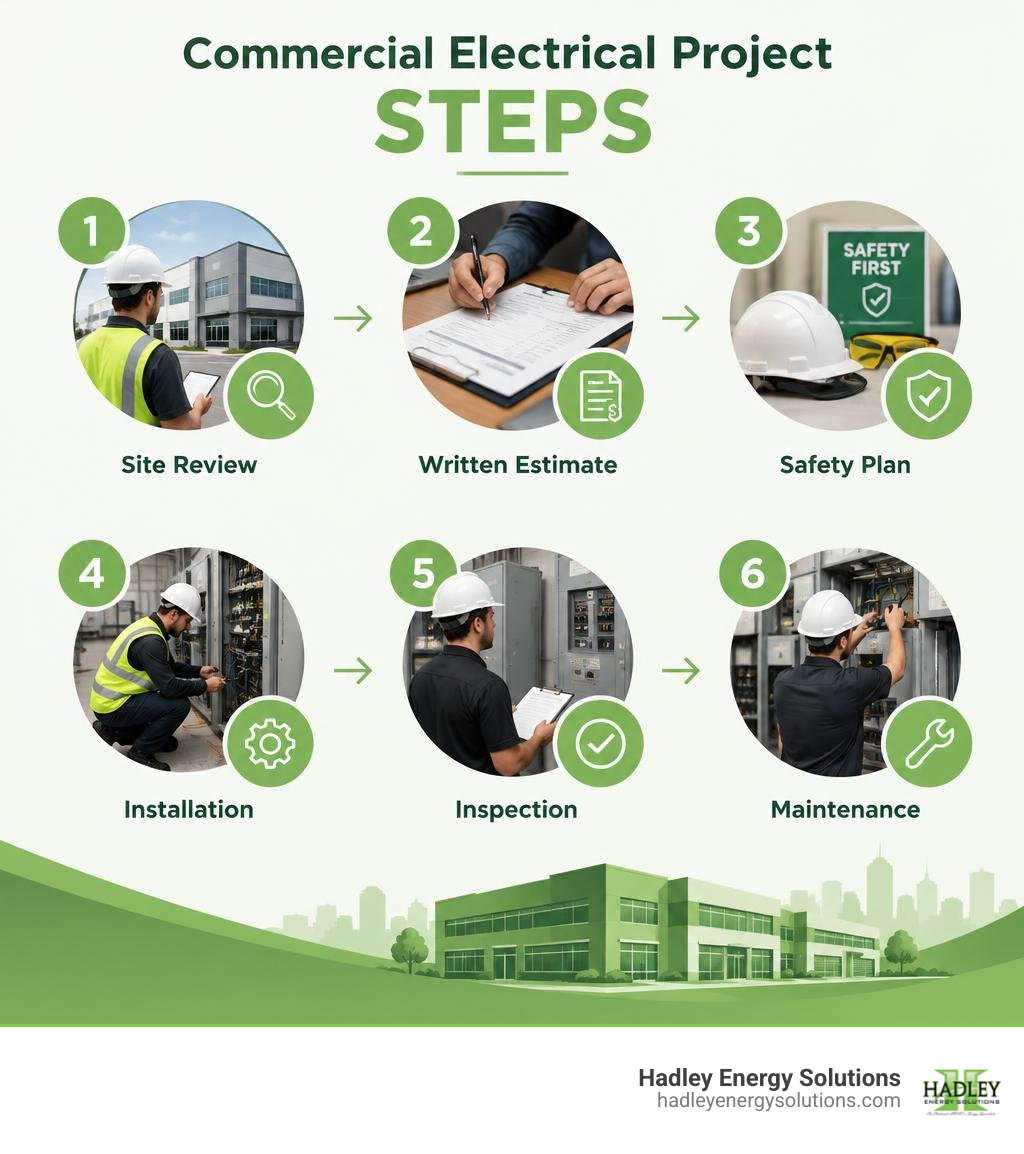
To hire a commercial electrical contractor, verify their license, insurance, and experience with systems like yours. Request an on-site review and a written estimate that spells out the work, exclusions, permits, and schedule. If an outage could stop operations, ask who answers emergency calls and how repairs are handled after hours.
For an aging Louisville facility, compare more than price. Look for a contractor who can plan safe repairs, upgrades, and ongoing maintenance without losing sight of downtime and energy costs.
I'm Rodney Hadley, president of Hadley Energy Solutions, a licensed Master Electrician, and a commercial electrical contractor with over 13 years of experience. My work spans industrial power, controls, lighting, and efficiency upgrades; this guide will help you decide what to ask before you hire.
Comprehensive Services Offered by a Commercial Electrical Contractor
Managing a commercial property means juggling tenant comfort, production schedules, safety protocols, and utility overhead. A full-service commercial partner handles everything from initial utility incoming feeds down to individual branch circuits, ensuring your facility operates safely, reliably, and efficiently.
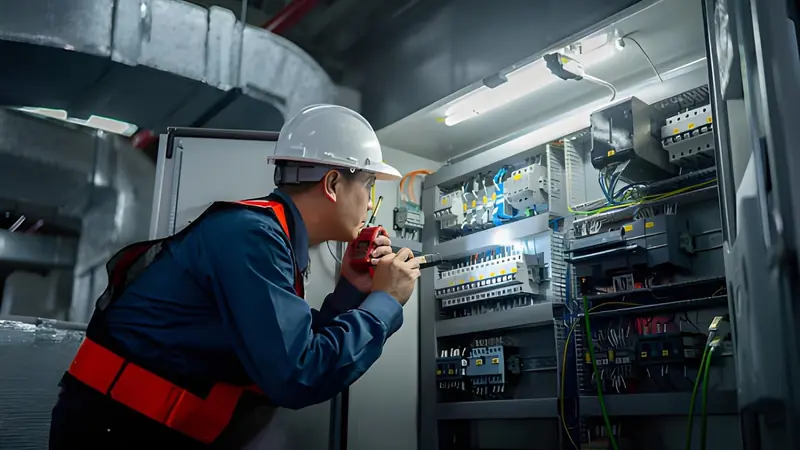
Core commercial electrical services encompass major electrical distribution installations and maintenance routines. In commercial settings, heavy equipment, large HVAC units, and industrial machinery rely on 480V three-phase power distribution. Maintaining switchboards, step-up or step-down transformers, and switchgear is essential to prevent catastrophic electrical faults.
For facilities with heavy machinery or automated processing, an experienced industrial electrical contractor will also install and service motor control centers (MCCs), variable frequency drives (VFDs), automated SCADA systems, and specialized control wiring. Coordinating electrical capacity with mechanical motor loads ensures breakers do not trip during peak operational hours.
Low-Voltage Infrastructure and Structured Cabling
Modern commercial buildings depend just as heavily on low-voltage communication and life-safety systems as they do on high-voltage power feeds. Commercial electrical teams install, test, and maintain integrated low-voltage infrastructure, including:
- Tele-data and structured cabling: Category cabling (Cat6/Cat6A) and fiber optic backbones connecting server rooms, individual tenant workstations, and wireless access points.
- Fire alarm systems: Code-compliant smoke sensors, pull stations, strobe horns, and control panel wiring integrated with building safety protocols.
- Access control and security: Magnetic door locks, badge readers, security cameras, and intercom networks.
- Specialized communication systems: Intercoms, public address systems, and specialized emergency alert wiring for institutional and medical buildings.
Energy Management, EV Chargers, and Lighting Retrofits
Rising utility rates make energy efficiency a critical financial priority for facility managers. Understanding the differences when comparing a commercial electrician vs energy management contractor helps you choose the right project delivery approach. While standard electricians handle wiring replacements, energy management teams evaluate your entire building profile to guarantee measurable kilowatt-hour reductions.
Key modern efficiency upgrades include:
- Commercial EV charging infrastructure: Deploying Level 2 and Level 3 DC fast chargers with intelligent load management so vehicle charging never overtaxes main distribution panels. You can explore modern EV charger installation to support green fleet conversions or tenant amenities.
- LED lighting and smart controls: Replacing obsolete fluorescent tubes and metal halides with high-efficiency LED arrays paired with occupancy sensors and daylight harvesting. Implementing commercial lighting retrofits often cuts facility lighting energy use by 40% to 60%.
- Building power monitoring: Installing real-time submetering and automated energy management controls to identify phantom power draws and balance peak utility demand.
Comparing Project Delivery: New Construction vs. Tenant Renovations
Whether you are breaking ground on a new distribution hub or updating an existing multi-tenant office, electrical project workflows differ substantially. Understanding these scope requirements helps keep your budget realistic and your timeline intact.
| Project Factor | New Commercial Construction | Commercial Tenant Renovation |
|---|---|---|
| Primary Electrical Focus | Utility service entrance, main switchgear, primary conduit pathways, grounding grid | Panel capacity verification, branch circuit rerouting, lighting controls, load balancing |
| Design Flexibility | High; electrical layouts are engineered before framing and drywall | Constrained; wiring must adapt to existing structural walls and ceilings |
| Site Coordination | Heavy multi-trade scheduling with concrete, framing, plumbing, and HVAC | Selective demolition, clean containment, and off-hours scheduling to protect operations |
| Load Calculations | Planned entirely from projected equipment schedules and anticipated expansion | Calculated from existing panel usage data plus proposed new tenant additions |
| Permits & Inspections | Comprehensive city building permits covering rough-in, above-ceiling, and final energization | Targeted electrical alteration permits and specific trade inspections |
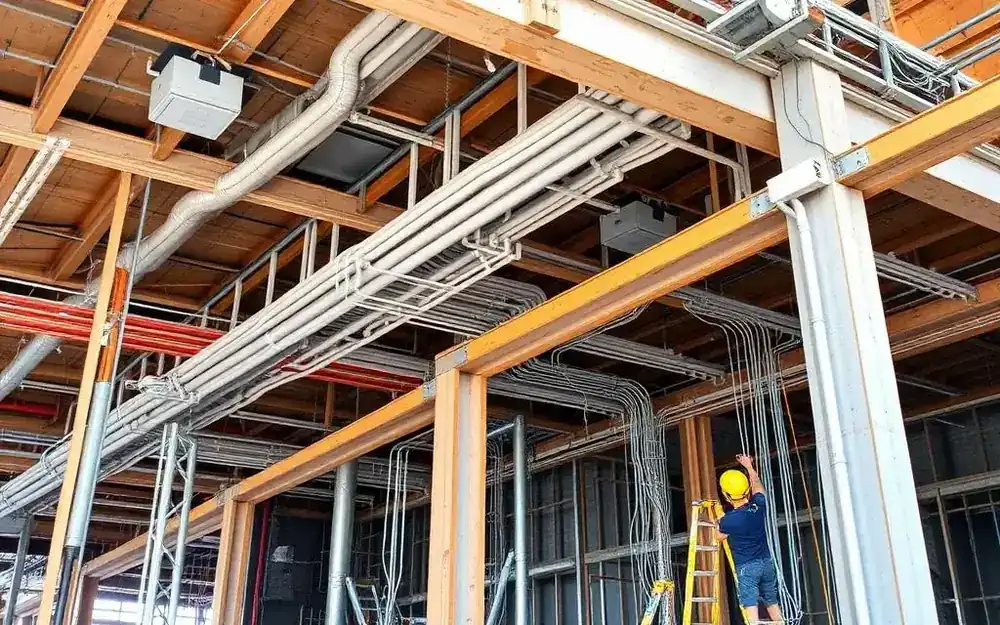
Understanding regional pricing factors is equally crucial when planning capital improvements. Reviewing typical commercial electrical costs in Louisville, KY can help you budget accurately for labor rates, permitting fees, and equipment procurement before issuing requests for proposals.
Why Design-Build Delivery from a Commercial Electrical Contractor Reduces Downtime
Traditional design-bid-build approaches often result in finger-pointing when field realities conflict with engineered blueprints. By contrast, hiring a team that provides unified design-build electrical delivery creates a single point of operational accountability from initial budgeting through final inspection.
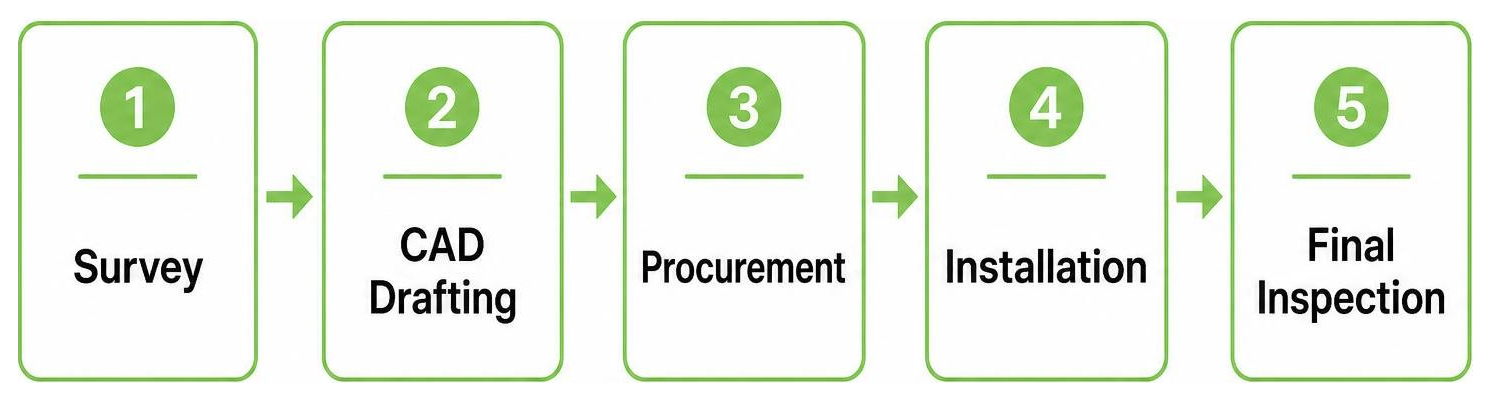
With in-house drafting and preconstruction engineering, contractors can complete constructability reviews early. This allows project managers to identify long-lead equipment bottlenecks—such as custom switchgear or utility transformers—months ahead of time, securing purchase orders before crews mobilize on site.
Industry-Specific Requirements Across Healthcare, Retail, and Industrial Facilities
Every commercial sector operates under distinct regulatory and physical constraints:
- Healthcare and clinical environments: Require isolated ground circuits, emergency branch transfer switches, clean containment barriers to protect indoor air quality, and strict adherence to NFPA 99 healthcare facility standards.
- Data centers and telecom hubs: Demand redundant power architectures (N+1 or 2N configurations), isolated battery rooms, uninterruptible power supply (UPS) backups, and zero-tolerance cutovers.
- Retail and hospitality spaces: Focus on aesthetic lighting controls, dedicated kitchen equipment feeds, point-of-sale low-voltage lines, and minimal disruption during customer shopping hours.
- Manufacturing and warehousing: Require 480V three-phase busways, overhead drop cords for reconfigurable assembly lines, heavy-duty surge suppression, and explosion-proof wiring in hazardous environments.
Key Criteria for Choosing Your Commercial Electrical Partner
Facility managers must look beyond bottom-line pricing when selecting a contractor. Knowing how to choose a commercial electrical contractor involves vetting their technical qualifications, safety records, and project management capacity.
Before signing a contract, evaluate the following qualifications:
- Licensing and master-level credentials: Verify active state electrical contractor licenses and confirm that master electricians oversee design and permitting.
- Bonding and insurance capacity: Ensure the contractor carries comprehensive general liability, worker’s compensation, and commercial umbrella policies, alongside adequate bonding capacity for your project size.
- Safety records and compliance: Look for established training programs adhering to OSHA standards, such as 1910.333 work practice safety regulations for energized equipment, along with a low Experience Modification Rate (EMR).
- Code mastery: Ensure thorough knowledge of the latest National Electrical Code (NEC) standards and local municipal building amendments.
- Trade integration: In complex facilities, working with a team that holds dual licenses across both electrical and HVAC systems eliminates communication gaps between equipment installers and power technicians.
Evaluating a Commercial Electrical Contractor for Specialized Systems
If your property utilizes specialized high-load or renewable power equipment, make sure your contractor has verifiable experience with these systems:
- Standby commercial generators: Sizing, automatic transfer switch (ATS) installation, and fuel system interlocks. Routine servicing of diesel, natural gas, or propane generators ensures emergency lights and critical refrigeration remain operational during utility blackouts.
- Medium-voltage distribution: Safe handling of distribution systems up to 12kV, including pad-mounted transformers, sectionalizing cabinets, and substation interconnections.
- Battery Energy Storage Systems (BESS) and commercial solar: Integrating behind-the-meter battery storage and rooftop photovoltaic arrays to shave peak demand charges and increase site resilience.
- Power conditioning and harmonics mitigation: Installing active harmonic filters and transient voltage surge suppressors (TVSS) to protect sensitive computer servers and microprocessors from utility grid spikes.
Managing Electrical Emergencies, Repairs, and Ongoing Maintenance
Even the most carefully engineered electrical systems suffer component wear, thermal stress, and environmental degradation over time. Facility managers need a trusted partner who can diagnose commercial electrical repair common issues—such as overloaded panel boards, harmonics, neutral heating, or failing circuit breakers—before they trigger major electrical fires or unscheduled shutdowns.
A comprehensive electrical service and repair plan blends proactive diagnostic tools with rapid field support:
- Infrared (IR) thermography scans: Certified technicians use thermal imaging cameras to inspect energized switchgear, motor disconnects, and distribution panels. Hot spots reveal loose terminations, unbalanced phases, or failing breakers long before they cause equipment burnouts.
- Power quality analysis: Monitoring voltage sags, swells, transients, and total harmonic distortion (THD) to protect expensive motors and industrial controls.
- Scheduled breaker and switch maintenance: Exercising circuit breakers, testing ground fault systems, and vacuuming dust buildup from transformer enclosures.
- Rapid dispatch protocols: Having a direct line for emergency electrical service ensures licensed field technicians arrive with fully equipped service vehicles to restore power safely whenever unexpected outages strike.
Frequently Asked Questions About Commercial Electrical Contracting
How quickly can a commercial electrical team respond to an emergency outage?
Dedicated commercial service providers maintain 24/7 on-call dispatch teams. Depending on your facility’s location and the severity of the incident, emergency technicians can typically mobilize within one to two hours. Priority response protocols focus on securing site safety, isolating faulted equipment, cutting over essential loads to emergency generators, and performing rapid diagnostics to safely restore primary power.
What is the typical lead time required to bid and start a commercial electrical project?
For standard service projects and minor tenant improvements, contractors can complete initial site surveys and return formal bids within 3 to 5 business days. Large-scale capital projects or complete design-build developments generally require a 2- to 3-week bidding and engineering window. With in-house CAD drafting capabilities, preliminary engineering drawings can be turned around in as little as 48 hours to expedite municipal permitting and preconstruction schedules.
How do commercial electrical contractors ensure local and national code compliance?
Licensed contractors ensure compliance by aligning all design calculations, conduit fill ratios, wire sizing, and panel clearances with the current National Electrical Code (NEC) standards and local municipal building codes. Master electricians pull all required commercial alteration permits prior to starting work, schedule mandatory municipal rough-in and above-ceiling inspections, and provide property owners with stamped as-built drawings and documentation upon final inspection sign-off.
Conclusion
Choosing the right commercial electrical partner is one of the most critical decisions a facility manager can make. From maintaining 480V main switchgear and engineering low-voltage structured cabling to deploying energy-saving LED retrofits and responding to midnight emergencies, your electrical contractor directly impacts your building's safety, uptime, and operating budget.
At Hadley Energy Solutions, we bring dual-licensed electrical and mechanical expertise directly to Louisville commercial and industrial facilities. Operating under one roof, our team delivers seamless coordination across power, controls, and HVAC equipment, backed by our written workmanship warranty and guaranteed energy savings.
Ready to upgrade your electrical infrastructure or establish a proactive maintenance plan? You can request an estimate online or contact us today to discover how our dedicated commercial electrical contractor solutions can keep your facility running safely, efficiently, and without interruption.
Hadley Energy Solutions Team
With 100+ years of combined experience, our team of licensed electricians, HVAC technicians, and certified energy auditors serves Louisville, KY and Southern Indiana. Licensed CE64623 | ME64500 | HM06538.